For your information
You are being redirected to one of our divisional subsites which contains more detailed information on the required division. To navigate back to the main Invicta Group site, please click the link found in the footer at the bottom of the page.









How effective logistics is overcoming the Brexit barrier
17th October 2025
Quick Quote
Contact Mick Coyne
To get a quotation or arrange a free site survey - Call Mick Coyne on
-
 UK
UK
Current location:
Quick Quote
Contact Mick Coyne
-
UK
Current location:
Britain’s exit from the European Union has dominated political discourse and media headlines for over a decade. Despite many people’s reluctance to take part in further discussions relating to Brexit, doing so is important, especially in light of a survey conducted by the European Council on Foreign Relations (ECFR) thinktank. It suggests that some of the vehement belief that the UK would thrive in complete isolation from the EU has faded in light of Donald Trump’s election, and Russia’s continued efforts to conquer Ukraine.
Whatever the benefits of Brexit appeared to be when people went to the polls back in the summer of 2016, the losses due to reduced trade and a sharing of standards have become more difficult to ignore. As much as most politicians seem keen to distance themselves from it, opinions seem to be shifting—and the loss of the United States as a reliable partner has led some to believe that we would benefit from closer ties to our continental friends.
Brexit’s impact on logistics
Before Brexit, the UK enjoyed relatively seamless trading with EU member states, primarily Germany, the Netherlands and France, benefitting from being part of the Customs Union and the Single Market. What happened after the vote was announced wasn’t a quick exit (we are all too aware of the many rounds of negotiations and succession of British prime ministers). Instead, it simply cast a long shadow of uncertainty over businesses that traded regularly with the bloc.
Beneath that shadow, imports into the UK from the EU dropped by 32%, and exports to the EU by 27%. A glimmer of hope was offered by the introduction of the Trade and Cooperation Agreement in 2021, which allowed for tariff-free trading on certain products, but that agreement also brought with it additional customs declarations, regulatory checks and rules of origin requirements. The queues at ports got longer, and so too did the list of hoops businesses trading with the EU now have to jump through.
Negotiations between the EU and the UK regarding the Trade and Cooperation Agreement continue, nine years after the UK’s departure. There exists a lot of uncertainty, but one thing is certain: international logistics specialists have had to adapt and adjust to a new normal, one that is subject to much more red tape and higher chances of delays.
Leveraging collaboration to overcome Brexit barriers
It is in the interests of both UK-based businesses and those across the Channel to find solutions to supply chain issues that can be caused by the bureaucratic waiting games and unexpected disruption caused by Brexit. Collaboration is key, as demonstrated by the Spanish logistics company GLS which has partnered with Royal Mail to make the process of sending things to and from the EU far easier (due to both belonging to the umbrella company International Distributions Service). But Royal Mail isn’t alone in establishing partnerships with companies in the EU; Yorkshire-based logistics company Europa Road (a division of Europa Worldwide Group) has established the Europa Flow solution, characterised by improved infrastructure and a focus on minimising and speeding up the now-necessary paperwork.
Aside from partnerships, technology is also coming to the rescue of businesses that import and export between the UK and Europe. The rise of AI – itself an uncertain topic – can automate the submission of customs declarations and help to predict delays by analysing data from both the British and French border. But it’s not just the significant delaying events (like staff shortages causing lengthy backlogs) that AI can help with; machine learning algorithms can tap into thousands of data points to optimise trade routes and save on shipping times.
Finally, advancements in warehouse management systems (WMS), which utilise the Internet of Things (whereby appliances and networks communicate with one another), enable businesses to handle increased complexity in stock management. After all, despite the measures taken to overcome Brexit’s import and export challenges, there will likely always be disruption, requiring organisations to invest in their warehousing needs to ensure that they are ready for any unpredictable events and – if we are to look for the silver lining – have the capacity to handle an increased number of orders as the administrative kinks of Brexit continue to straighten out.
A warehousing opportunity to overcome Brexit barriers
With the additional paperwork, regulatory checks, and the potential for delays at ports, companies are increasingly turning to warehousing as a buffer. By storing more goods closer to their markets or points of distribution, businesses can better manage supply chain uncertainties. This shift has created a surge in demand for warehouse space, leading to higher prices and intensified competition for both facilities and land.
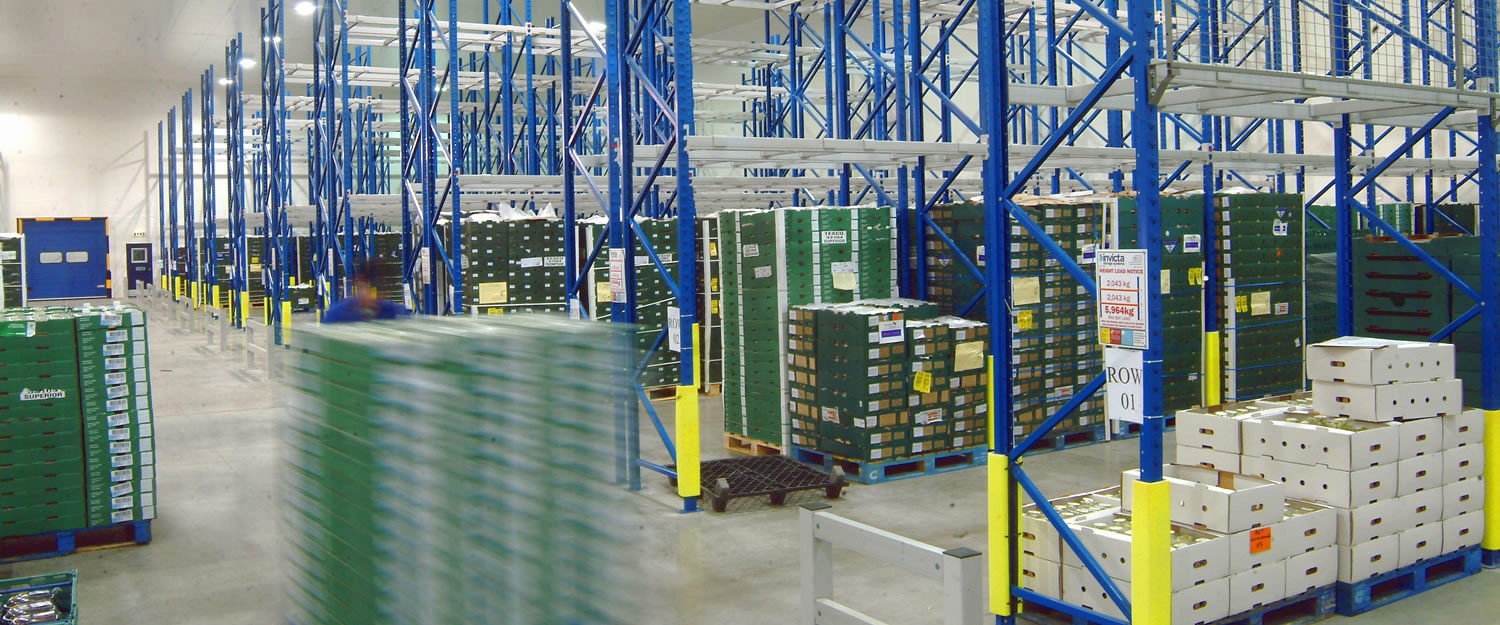
But simply increasing warehouse capacity isn’t enough. Instead, organisations should be focusing on warehouse efficiency. Perhaps, for you, that means the implementation and proper policing of ABC management, whereby the stock most frequently sold is placed in the most accessible, closest and convenient place within your warehouse, whereas rare stock can be shelved further away. Alternatively or in addition, experts recommend the installation of double deep pallet racking, allowing and encouraging efficient retrieval on a last in, first out (LIFO) basis.
If you would like to get technical with your warehousing efficiency improvements, consider an automated storage and retrieval system (AS/RS) whereby computer-controlled systems automatically store and retrieve stock. The advantages of AS/RS are reduced labour costs, improved accuracy and significantly enhanced efficiency.
–
Brexit happened. For good or ill, depending on your opinion, it is an event that has shaped inter-Europe trading for UK-based companies and will continue to do so for the foreseeable future. Far from simply throwing the towel in, logistics firms are rising to the many challenges, adapting to a new normal and forging partnerships to make trade possible.
Your organisation will also have adapted to that change, and is likely placing enhanced importance on the need for effective warehousing. If that is the case, speak to our team of racking specialists who can find the right solutions for your business today.
Accreditations & Affiliations






Share/Like this page