For your information
You are being redirected to one of our divisional subsites which contains more detailed information on the required division. To navigate back to the main Invicta Group site, please click the link found in the footer at the bottom of the page.








Which forklift is better: electric, diesel, LPG or biofuel?
28th November 2025
Quick Quote
Contact Mick Coyne
To get a quotation or arrange a free site survey - Call Mick Coyne on
-
 UK
UK
Current location:
Quick Quote
Contact Mick Coyne
-
UK
Current location:
With apologies to certain employees, forklifts are the workhorse of the warehouse. Yet these mundane-seeming machines are coming under increasing scrutiny: in terms of safety, pollution, and as difference-makers for productivity. What seemed like an unchanging technology is now a major factor in both efficiency and employee health.
So where has this drive for change come from? The answer is a diversification of forklift types, and a more competitive technological landscape. Here’s everything you need to know about the different types of forklift, and which forklift is ultimately better: electric, diesel, LPG, or biofuel.
Types of forklifts
Forklifts come in a few different categories. While there are many formats of forklift, they are predominantly divided by the type of fuel they use. These are:
Electric forklifts
While the uptake of electric vehicles in general has been somewhat patchy, the same cannot be said for electric forklifts. A major drive for warehouse sustainability has seen demand skyrocket over the past few years, encouraging further innovation. Today’s electric forklifts have overcome many of their traditional disadvantages, offering performance equivalent to fossil fuel-driven models with the added benefits of electric operation.
Similar to other electric vehicles, electric forklifts are powered by large, rechargeable lithium-ion batteries. These can be charged at dedicated charging stations within the warehouse, with operation tending to be cheaper than fuel-based vehicles, though this depends on current market conditions.
The lack of moving parts in an electric forklift means that it tends to have lower maintenance costs and run quieter than a diesel forklift, while the absence of fossil fuels means it can be safely used indoors without any concerns around air pollution, at least beyond tire wear. However, the electrical operation does mean that electric vehicles are predominantly indoor vehicles, and less suited to prolonged outdoor operations.
Diesel Forklifts
Diesel forklifts are the traditional warehouse powerhouse. Or at least, they’re an around-the-warehouse powerhouse. The great benefit of diesel vehicles is their traction and high-power output, making them ideal for heavy-lifting and heavy-duty tasks. This makes them useful not only for lifting large pallets, but also traversing rough terrain—good for dodgy ramps and rough floors, but particularly valuable in outdoor environments.
Unlike electric vehicles, they’re also more reliable in a range of weather conditions, with fewer concerns about exposure to rain or the effects of low temperatures. A tank of diesel also goes a long way, making them efficient operators, at least while diesel remains a cost-effective form of fuel. This is an open question in terms of longevity, with diesel road vehicles being phased out much more quickly than petrol ones. Diesel also has issues with long-term storage, and can be slower than other options to refuel.
The biggest drawback of diesel forklifts beyond fuel costs and availability is their emissions. Diesel emissions are particularly damaging to both the environment and human health, having a significant impact on indoor and outdoor air quality. This has led to diesel road vehicles being significantly penalised by schemes like ULEZ, and driven a massive drop-off in diesel car sales. Using diesel forklifts indoors is inadvisable, and at the very least requires serious and sustained efforts at indoor ventilation and air quality monitoring. Diesel engines also run loud—an irritant and stressor for employees, and potential contributor to hearing issues.
LPG Forklifts
LPG forklifts are one of the newer options, and a growing segment of the market. LPG stands for liquid petroleum gas, a by-product of petrol production and natural gas processing. LPG is still a fossil fuel and so produces pollution through carbon dioxide emissions, but it burns more cleanly than petrol or diesel, and is thus more efficient and less polluting. This makes it a halfway-house between fossil fuels and renewables, and gives it some of the benefits of both types of vehicles.
LPG forklifts can be used more readily indoors, though sufficient ventilation is still required. As LPG comes in swappable cylinders, it’s also quicker than refueling a diesel or even biofuel forklift. This does mean storing those LPG cylinders, however, which brings with it both an issue of storage space and protecting that storage space from potential fire and blast risks. The trade-off is a vehicle which pollutes less than other fossil fuel-based options and can perform better than electric options—though this gap is closing all the time.
Biofuel Forklifts
Biofuel has been heralded as an option for cleaner vehicles for years, but is finally breaking through into industrial vehicles. Biofuel forklifts aim to provide as many advantages of fossil fuel forklifts as possible without the same concerns around emissions. What’s more, they can in some cases represent a direct upgrade option, with the possibility to convert diesel engines to run on biofuel.
Biofuel isn’t a zero pollution option, but it’s lower than both petrol and LPG, making it another solid option for indoor or mixed use. Where vehicles can be adapted, it also offers similar performance to diesel vehicles, though this is not always the case.
The biggest problem is when vehicles can’t be adapted. As biofuel remains the rarest of all forklift options, it can also be the most expensive. This isn’t including the cost or availability of the fuel itself, which can be difficult to source. Biofuel also isn’t standardised, as many different forms of biofuel exist, complicating things further.
Forklift formats
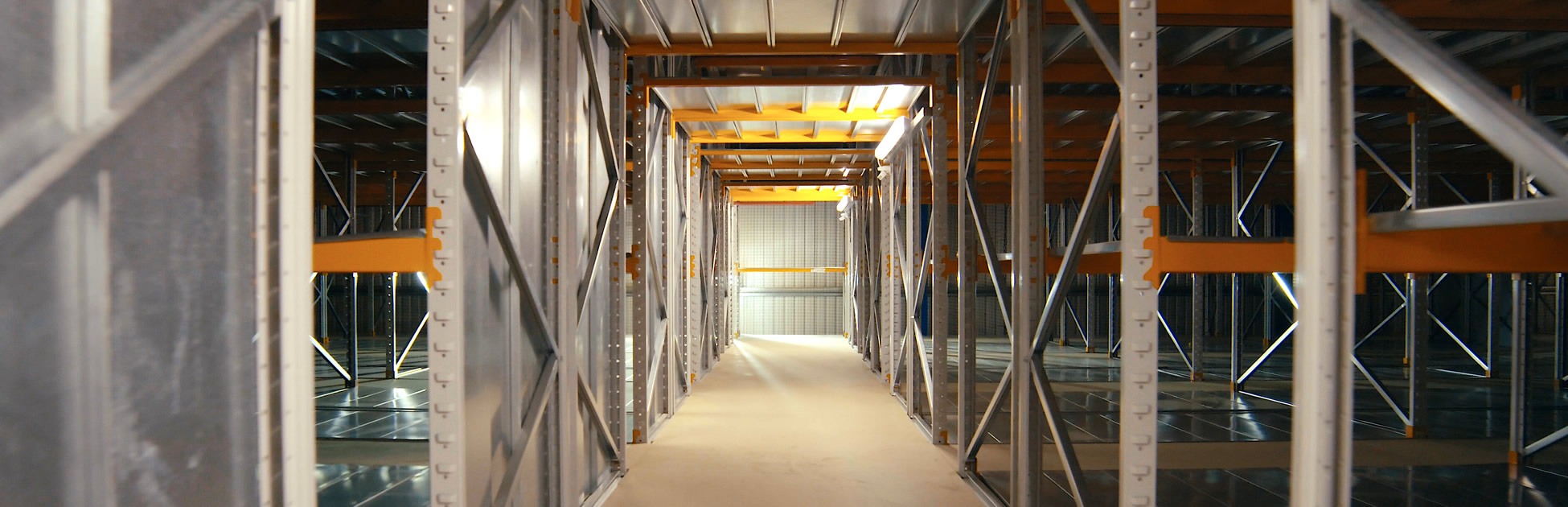
Of course, fuel isn’t the only consideration when buying a forklift. Increasingly, forklifts are being bought according to the dynamics and requirements of individual warehouses. Narrow aisle pallet racking for instance may create aisles that are too narrow for conventional forklifts to turn around in. Specially designed forklifts can navigate these aisles by using tower masts, pantographs, or other technology to extend or rotate the forks, allowing for the narrow aisle racking to substantially increase storage density.
Guidance systems such as wires, rails, and sensor arrays are also allowing for autonomous or semi-autonomous forklifts to undertake tasks automatically. On the other end of the technological spectrum, pallet jacks and stackers provide a range of options for moving and storing pallets, many of which are often used within the same warehouse environment. This can add even more specificity to choosing a forklift fuel type.
Which forklift fuel type is best?
The honest truth is that there is no single best option for a forklift. Each option confers unique benefits: diesels are widely available, and therefore fairly cost-effective, while the other options can be more expensive. But the other options are also more environmentally friendly and better for the health of anyone operating around them, while also bringing benefits and drawbacks in terms of fuel costs and refuelling time.
The key question is around the longevity of each forklift type. Diesel vehicles seem to be the most vulnerable to a phase out, as well as possible fuel cost rises, and could even be impacted by legislation in the pursuit of net zero. Electric forklifts seem to be the future, and have come a long way in a short time, with many options now offering similar performance to traditional fossil fuel-based options. However, these also bring their own concerns in terms of battery longevity, and the need for recharging.
Ultimately, adoption will drive demand, and electric vehicles seem likely to win out. New rapid-charging batteries from China look set to revolutionise electric cars, and will doubtless make their way to forklifts. The question is how quickly this transition happens, and the extent to which it devalues existing electric forklifts. Current technology is already at a point of near parity to fuel-based options, but that may not be enough to tip the balance for some as long as diesels remain cheaper.
–
The plurality of options available for forklifts today is a net positive for warehouse operators. As well as helping to meet sustainability targets, new fuel types are also helping to reduce air pollution in and around warehouses without compromising on performance. Combined with a growing range of narrow aisle and other specialised forklift options, the humble forklift truck is an increasing point of focus—and a way to improve both warehouse safety and performance.
Accreditations & Affiliations






Share/Like this page