For your information
You are being redirected to one of our divisional subsites which contains more detailed information on the required division. To navigate back to the main Invicta Group site, please click the link found in the footer at the bottom of the page.








Do UK warehouses need to modernise?
16th December 2025
Quick Quote
Contact Mick Coyne
To get a quotation or arrange a free site survey - Call Mick Coyne on
-
 UK
UK
Current location:
Quick Quote
Contact Mick Coyne
-
UK
Current location:
Ever since leaving the EU, much of the discussion has been about how the UK economy can continue to be competitive on the global stage. This means investing in key industries, but it also means upgrading infrastructure. The nature of the global economy and recent instability mean that resilience is just as important as improving efficiency.
One target for this discussion is the UK’s warehouse estate. While new warehouses are constantly being built to cater to the growing demands of eCommerce, thousands of warehouses across the country are several decades old, and little more than shells stuffed with racking. Genuine economic transformation means confronting this issue—and finding ways to modernise UK warehouses without an undue impact on businesses.
The issue with infrastructure
People living in the UK will be no strangers to dated infrastructure. The state of the nation’s roads is frequently lamented, as are the railways, with signalling issues and maintenance causing frequent delays and disruption. All of this contributes to disrupted freight and commercial traffic as well as travel for work and leisure, all of which leads to lost revenues, and a negative impact on the economy.
Improving this kind of infrastructure is part of the government’s recent Modern Industrial Strategy, and its plans to revitalise and modernise the UK economy, particularly when it comes to keystone industries such as construction, logistics, and technology. Yet much of the investment planned and cited in that report is on a macro level, targeting areas like ports and fuel infrastructure for hydrogen vehicles. Much less has been made of the need to modernise warehouses, and the many factors driving this.
The idea of a new Industrial Revolution-–termed Industry 3.0—has been around for well over a decade, and was based on the idea that the warehouses and factories of the future would be almost completely automated, with each part of the supply chain connected to each other. This is increasingly becoming a reality, with the ability to automate nearly every aspect of logistics, from driverless vehicles to automated racking systems and smart inventory management. Warehouses and businesses that neglect to adopt these technologies risk being left behind—and all at a time when the UK is looking to gain an edge over global competitors.
Rising rents and relocation
Until the last year or two, these might have been seen as immature technologies, and indulgences that most businesses couldn’t afford to make. Yet warehouse optimisation is increasingly becoming a necessity, whatever form that might take. One key factor is warehouse rents, and the affordability crisis in warehouse storage. Colliers’ latest Industrial and Logistics Rents Map shows that prime headline rents for mid‑box or multi‑let industrial units reached an average of £15.55 per ft² in June 2025, up 4% year‑on‑year.
Large distribution units (above 100,000 ft²) meanwhile saw headline rents as high as £11.90 per ft², up 5.2% annually. These sustained rent increases above inflation are squeezing margins for businesses, and limiting options for those considering relocation or expansion. The scarcity of appropriate land and complex planning for new builds are also having an impact. While the government is going to great lengths to break down these barriers and free up brownfield land in particular, the demand for same-day deliveries means that prime real estate is actually moving into and around cities, limiting the pool of available warehouse space even further.
This landscape means that modernising existing warehouses in situ is becoming increasingly necessary. This isn’t all about automation, but instead every investment that can reap rewards in the long run, and better secure businesses against potential costs. From the impact of global instability on supply chains to rising rents and competition, the landscape for many businesses is posing serious questions about sustainability—and encouraging them to retrofit warehouses instead of building anew.
Modernising warehouses from within
Modernising warehouses doesn’t necessarily mean trying to imitate Amazon. Warehouse automation is perhaps more feasible than many people realise, with robotics-as-a-service (RaaS) allowing you to rent robots in order to reduce overheads. But neither automation nor other improvements need to be wholesale overhauls. Improvements can be incremental as long as they form part of a coherent strategy, one which considers long-term benefits and feasibility against short-term costs.
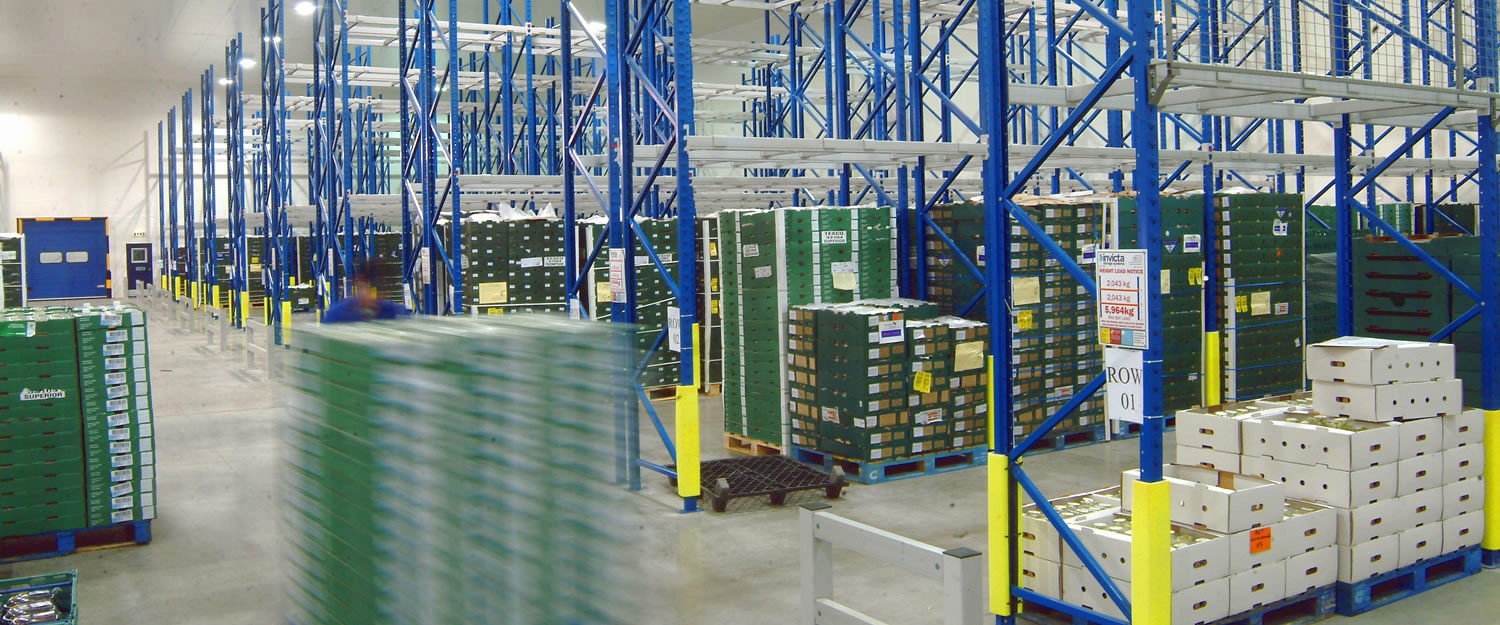
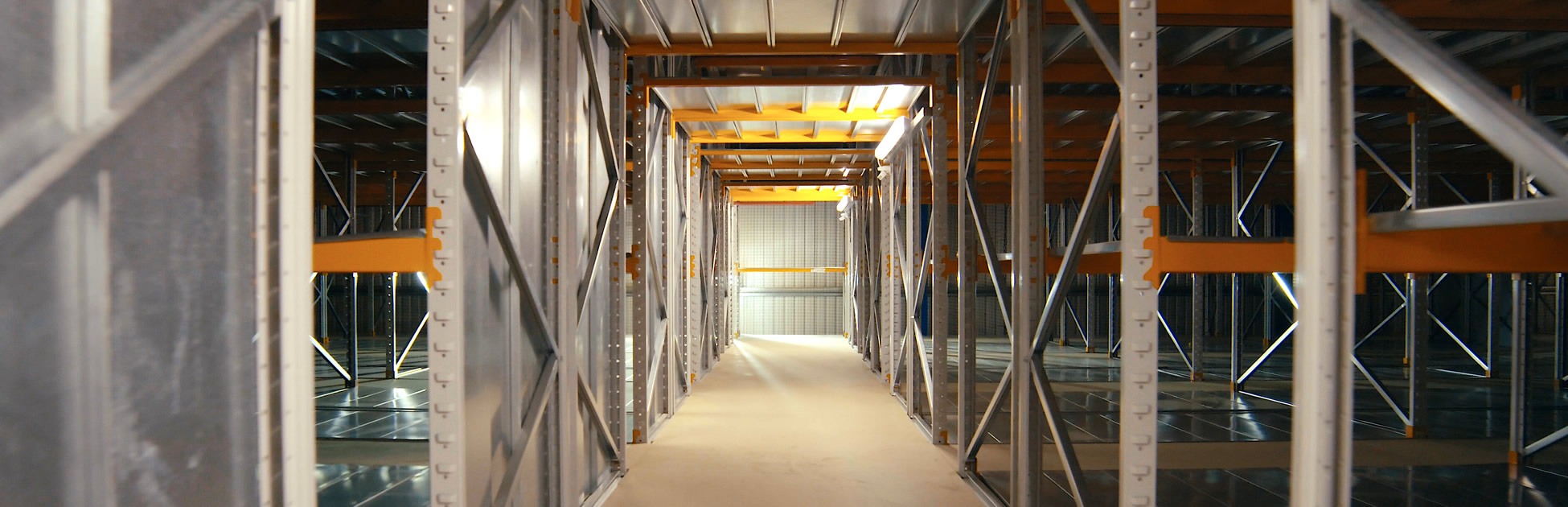
One of the most effective ways to boost capacity and performance within existing warehouse spaces is through high-density racking. Replacing antiquated pallet racking systems with modern, high density formats such as narrow aisle racking, shuttle racking, drive‑in configurations, or multi‑tier mezzanines can significantly increase the number of pallet positions in a warehouse, and boost operational throughput. These systems make better use of vertical and horizontal space, potentially doubling the amount of available storage space or halving its footprint, reducing the distance that staff or machinery need to travel.
Another central element of warehouse modernisation is the adoption of more advanced warehouse management systems (WMS) and smart technology. Implementing a modern WMS that links with sensors, RFID (barcode or QR code) tracking, and real-time data analytics enables the movement and location of stock to be minutely tracked, and improves picking accuracy by guiding workers to the correct bays. Data analysis also allows the WMS to automatically highlight inefficiencies in your workflows, and suggest corrective action. These technologies allow warehouse managers to optimise traffic flows around the warehouse, remotely monitor inventory, and implement predictive maintenance—all increasing productivity and reducing waste.
Sustainability and decarbonisation are also major points of focus, both in terms of saving money and the planet. As environmental standards tighten and energy prices fluctuate, measures like replacing lighting with energy-efficient alternatives, improving building insulation, and adopting renewable power sources such as solar panels on large warehouse roofs can make warehouses greener and cheaper to run. Modern racking systems can also support these goals by allowing for better temperature zoning, airflow optimisation, and safer storage practices that reduce product waste through damage and spoilage.
Warehouses are also being modernised through smarter logistics and Internet of Things (IoT) integration. By linking internal systems and sensors to external transport networks, carriers, and customer platforms, businesses can gain real-time visibility into the entire supply chain, tracking deliveries to the minute. Sensors and automation tools can help schedule more efficient deliveries, inform you about delays, and streamline the order fulfilment process across inbound and outbound logistics. This type of end-to-end integration is increasingly crucial for the agility needed to compete with big e-commerce companies.
Optimising your warehouse racking
Improving your warehouse racking is perhaps the most comprehensive change you can make that also won’t break the bank. When working with a client, we always start by conducting a detailed site assessment, developing a tailored racking layout that aligns with both the unique footprint and limitations of your facility, and your current and future storage requirements.
We then work with you to arrange installation in a way that avoids disruption, working around your schedule and active operations. This approach makes it possible to upgrade infrastructure without shutting down the warehouse where possible, using experienced installers and a modular design that allows for rapid, safe assembly. Our team can also support plans for current and future integration, whether that’s aligning racking systems with conveyor belts, robotic pickers, or warehouse management software.
All of these changes are not just prudent on a micro level, but align with a national economic policy that’s been consulted on and agreed with the wider logistics sector. The government’s Modern Industrial Strategy 2025 prioritises more resilient, sustainable, and digitally integrated supply chains, of which warehouse modernisation is a fundamental part. As public funding becomes available through initiatives like the Strategic Sites Accelerator and green logistics funds, businesses that create plans to invest in internal upgrades will be better positioned to benefit from government support and incentives.
–
In a logistics sector shaped by rising rents, limited land availability, and challenging international factors, modernising in place is becoming more and more of a necessity. At Invicta Racking, we can provide the expertise, systems, and rapid installation needed to unlock the full potential of your current space, and secure the future of your business. To learn more and book a complimentary site visit, get in touch with us today.
Accreditations & Affiliations






Share/Like this page