For your information
You are being redirected to one of our divisional subsites which contains more detailed information on the required division. To navigate back to the main Invicta Group site, please click the link found in the footer at the bottom of the page.








How returns are changing the game for warehouses
22nd December 2025
Quick Quote
Contact Mick Coyne
To get a quotation or arrange a free site survey - Call Mick Coyne on
-
 UK
UK
Current location:
Quick Quote
Contact Mick Coyne
-
UK
Current location:
The explosion of e-commerce has profoundly reshaped retail, but it’s also created a growing headache for businesses. As more and more companies look to compete with Amazon’s generous returns policy, it’s no longer just about getting products out to customers quickly, but also about processing returns, and figuring out what to do with these items.
The rise of returns is posing questions about not just how returns are handled, but how warehouses need to change to accommodate this. The answer may lie in several places: from increased uptake of automation, to new storage solutions, to tech that not just monitors and automates the warehouse environment, but is embedded in the entire logistics process.
Return to sender
Returns are far from a new phenomenon in retail, but they have come to define e-commerce. The ability to purchase items sight unseen (and more importantly, unworn) meant that customers needed more forgiving returns policies. While retailers such as Uniqlo still impose a charge for returns, and size prediction tools exist, most businesses have erred towards free return policies. This means people ordering more items in different sizes, some of which might not be returned, but it also inevitably means hugely amplified return rates.
While not all returns are in fashion and footwear, this is by far the most dominant category. Return rates have hit 40 to 60% during promotional periods, with return-related logistics forecast to exceed £27 billion each year In the UK alone, including the return of more than half of all clothing purchases. Managing these returns can require inspection, transport, restocking, and even disposal in some cases, cutting into both a product’s value and the business’ bottom line.
Where returned goods used to be something of an afterthought, returns now have strategic implications. Storage needs to be allocated, staffing requirements have increased, and any delay compounds the already considerable costs. Items stuck in ‘returns limbo’ occupy valuable warehouse space, while unprocessed refunds can irritate customers, and prevent them from reinvesting their money in one of your other products. Little wonder then that a growing number of businesses are struggling with the issue—particularly around sales peaks that once represented easy wins.
The inevitability of automation
If the growing volume of returns has achieved anything, it’s to accelerate the uptake of automation. Autonomous vehicles, robots and automated racking systems are increasingly the only realistic answer to the challenges posed by returns, particularly in light of staffing shortages. Manual handling simply cannot keep up without significant disruption, and the horse seems to have bolted when it comes to rowing back on returns policies.
Returns management systems (RMS) and warehouse management systems (WMS) provide the groundwork for this. These systems are the brains behind most forms of warehouse automation, allowing not only for centralised control and monitoring of the returns process, but also the interlinking of different systems and hardware. An RMS or WMS can potentially automate label creation, dynamically create and adjust routes through the warehouse, update stock levels in real time, detect unauthorised returns, and provide analytics into return causes and volumes.
An RMS platform will ideally sit alongside and integrate with your WMS, helping to centralise tracking from the start of a return through to restocking or disposal. Once in place, autonomous mobile robots (AMRs) and automated sortation systems can process returns quickly and efficiently, whether that’s shepherding items to human packers for putaway, or evaluating attributes such as condition and resale value, helping you to make faster and more informed decisions.
Return storage solutions
Unsurprisingly, returns are putting a unique strain on warehouse storage systems. Because returned items often arrive unsorted or in condition-unknown batches, warehouses increasingly require space for segregating and quality checking items before they can be stored and relisted. Without putting the proper infrastructure in place, returns can easily get mixed with the rest of your inventory, throwing a spanner in the returns process.
In light of these challenges, traditional pallet racking systems can’t always offer the flexibility or throughput needed for an effective returns workflow. As a result, warehouses are turning to modern racking solutions that are more agile, more dense, and more adaptable to the constant churn of returns.
Multi-tier racking systems
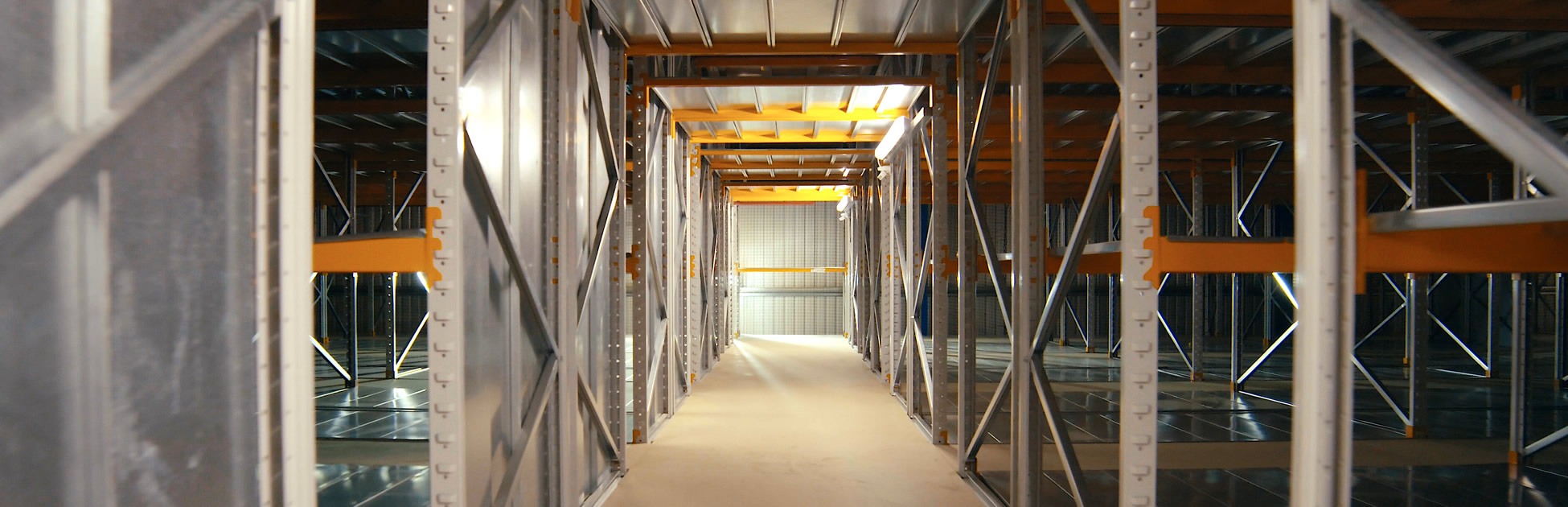
Multi-tier racking (sometimes known as mezzanine systems) allow warehouses to add multiple vertical levels of storage without expanding the storage footprint. For returns management, this enables the creation of dedicated tiers for incoming returns that are awaiting inspection or grading. By elevating these returns zones, warehouses can keep them physically and operationally separate from existing picking areas. Once returns are processed and cleared, they can be moved to lower levels for restocking or staging, maintaining the flow of operations.
In addition to separating parts of your workflow, multi-tier systems can support dense storage layouts, and can even accommodate conveyor belts or sorters that connect different levels together. This integration creates an efficient and ergonomic process for managing high volumes of returned items, clearly segmenting parts of the warehouse without impacting the flow of goods, or disrupting existing processes.
Mobile and drive-in racking
Mobile racking systems and drive-in racking systems are a good choice in terms of both the storage density and accessibility needed for unpredictable volumes of returns. Mobile racking aisles are particularly useful for flexible spaces, with rails that allow them to be compacted or expanded depending on demand. By only ever creating an aisle when required, storage volumes can as much as double, providing the most efficient possible storage solution at the cost of slightly reduced access speeds.
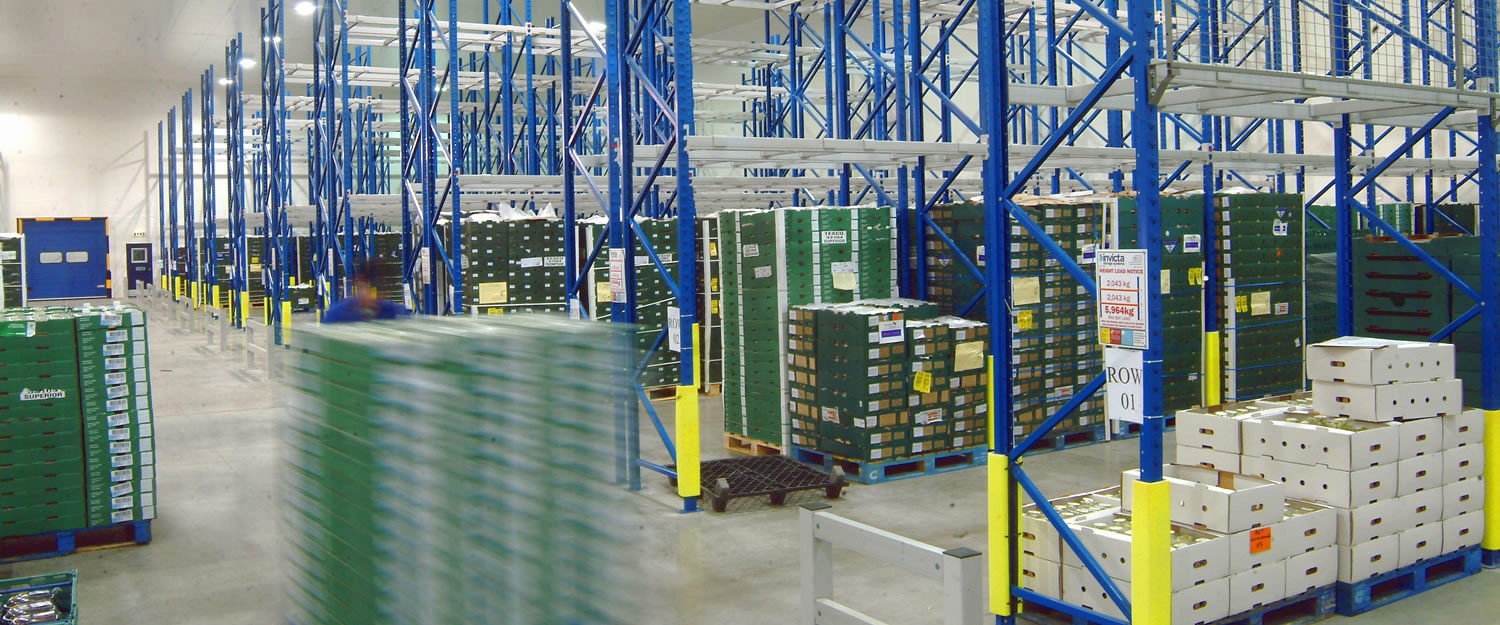
Drive-in racking on the other hand is better suited to returns of individual SKUs, or bulk returns that don’t require immediate processing. It allows forklifts to literally ‘drive into’ the racking structure and deposit multiple pallets in a bay, both reducing aisle space and increasing storage density. This makes it ideal for returns awaiting further actions, such as grading or disposal, and is a cost-effective solution where rapid retrieval of pallets stored deep within the racking isn’t necessary.
Integrating automation with racking
The key to integrating racking and automation is to plan the returns process from the ground up. This doesn’t necessarily demand a complete redesign of your warehouse, but it should identify areas that would benefit from being tweaked. A well-optimised warehouse will typically be structured around a few key functional areas: a returns zone for receiving and sorting items; a buffer zone to store them; and a processing zone to inspect them, and make a decision on where they go next.
In a fully automated warehouse, this might start with autonomous mobile robots (AMRs) or sortation belts that receive the returned items, scan their barcodes or labels, and direct them into the buffer zone. Shuttle racking or an automated storage and retrieval system (AS/RS) can then ferry them into storage until they’re ready to be processed. They can then be sent on to processing stations for manual inspection, grading the items before they are sent for integration back into pick zones, or on to other warehouse destinations.
A system like this may seem optimistic for a small or medium-sized business, but it’s well within the realms of possibility. Combining a modern WMS with an RMS platform allows for different levels of automation to be integrated together, processing and handling returns with minimal human intervention. As a result, items can be much more quickly restocked, moved to secondary sales channels, or properly disposed of, and picking areas can remain free of clutter and disruption, keeping up your customer service standards.
The benefits of automating returns
Automation has come a long way in the past few years alone, and has progressed from an immature technology to one that genuinely warrants your consideration. When it comes to returns, investing in automation makes sense on several fronts. One of the most immediate and obvious advantages is speed: by automating tasks like scanning and sorting, warehouses can dramatically reduce the time it takes to inspect and restock returned items. The faster you can process returns, the more of a product’s original value can be recovered, especially in fast-moving sectors with low margins.
It’s also a major bonus in terms of labour. Shortages of warehouse operatives have affected companies for several years now, and automation can help with this. As well as filling some roles entirely, human workers can be redeployed to tasks like grading and quality control where they offer more value, or do tasks that automation simply isn’t up to yet. This not only reduces labour costs, but also reduces repetitive manual work, improving the health and productivity of your workforce. Smarter racking solutions can also allow warehouses to make better use of their existing space, managing returns without needing an expensive expansion project, or compromising the flow of outbound goods.
There are also benefits for sustainability. Making your ‘reverse logistics’ (a term for the returns process) more efficient supports what’s known as the circular economy, helping companies to resell, repair, or recycle returned products rather than discarding them. For brands with sustainability commitments, a better returns process can open up entirely new opportunities to reduce waste—and provide customers with faster refunds, better communication, and more of a reason to shop with you.
Which racking format is best for returns?
While the racking formats we’ve mentioned above are all valuable for handling returns, the specific format you require will depend on your operational needs. Multi-tier racking systems are ideal for adding vertical capacity in environments with excess headroom and limited floor space. They work especially well for staging returns, inspecting goods, and any repairs or refurbishments you might undertake. A well-planned multi-tier racking system can use conveyors, lifts and chutes to move items between levels quickly and efficiently.
By contrast, automated storage and retrieval systems (AS/RS) are perfect for rapidly moving items into buffer storage, or moving returned goods back into regular storage. When used in conjunction with an RMS or WMS, these systems offer precise control of the returns process, reducing labour requirements and processing returns at speed. This makes them a great choice for a brand-new warehouse fit-out or refurbishment that wants to integrate the most modern, efficient solution possible.
For warehouses with smaller budgets or return volumes, mobile and drive-in racking are a flexible option that also saves a significant amount of space compared to other racking formats. While not automated, these racking systems allow for high-density storage of regular stock or returns, especially those that don’t require immediate action. If your returns fluctuate or you are considering your returns policy, this racking can easily be adapted and redeployed to host other pallets.
The most advanced return handling facilities will adopt a hybrid solution that integrates most or all of these racking formats. They will use multi-tier systems for staging and processing, AS/RS for rapid automation, and high-density racking for overflow storage. With a warehouse management system, these different formats can be more easily and seamlessly integrated, reaping the benefits of each format with few of the drawbacks.
–
E-commerce is only continuing to grow, and customer expectations are continuing to rise, meaning the volume of returns is likely to rise with them. Warehouses will likely need to adapt to this, and quickly. For those companies that do, investing in modern racking infrastructure, software and robotics looks like the surest bet.
Need help modernising your warehouse to handle returns more efficiently? We can design and install racking to accommodate a range of automation solutions, and equip you to seamlessly process returns. Contact us for a free site visit, and discuss your racking requirements today.
Accreditations & Affiliations






Share/Like this page