For your information
You are being redirected to one of our divisional subsites which contains more detailed information on the required division. To navigate back to the main Invicta Group site, please click the link found in the footer at the bottom of the page.








What is order cubing, and how can it improve fulfilment?
6th October 2025
Quick Quote
Contact Mick Coyne
To get a quotation or arrange a free site survey - Call Mick Coyne on
-
 UK
UK
Current location:
Quick Quote
Contact Mick Coyne
-
UK
Current location:
Warehouse technology seems to be advancing by the day, and one new storage technique is gaining particular attention. Order cubing is the result of several new technologies, all combining to make the storage of goods in a warehouse more efficient than ever, and the fulfilment process even easier.
Order cubing won’t work for everyone, but where it is possible and sensible to implement, it can unlock significant improvements in efficiency, both in terms of fulfilment and storage. Here’s everything you need to know about order cubing: what it is, how it works, and how it can be used to maximise the benefits of different kinds of warehouse storage.
What is order cubing?
Order cubing is an advanced form of stock keeping where items of similar cubic dimensions are grouped together. This allows them to be stored more efficiently, with the minimum possible amount of empty space between items. This approach also ensures that pickers can easily locate and retrieve products without unnecessary searching or movement of items, which can cause damage.
Order cubing has become increasingly popular and viable as a result of new software and automation systems. By using an advanced warehouse management system (WMS), it is possible to quickly analyse entire product ranges, and then categorise an enormous number of SKUs based on their cubic dimensions. The storage of these items can then be decided based on the dynamics of the warehouse and the size and availability of racking, and forwarded to operatives or autonomous vehicles.
There are various kinds of order cubing based on software being used, the goods being stored, and the level of integration between the WMS and the wider logistics process. The most advanced is dynamic cubing, where the WMS analyses real-time data to dynamically adjust the packing strategies for goods. Cartonisation focuses on picking boxes based on item sizes and weights, while volume-based cubing looks at cumulative item volume. Finally, 3D bin packing uses advanced algorithms to determine how goods will fit and tesselate into containers based on their volume and shape.
The benefits of order cubing
Order curbing is all about making warehouse storage more efficient, and saving space is the primary goal. The ability to easily group items of similar sizes (or awkward sizes that fit together) allows for better space utilisation than simply ‘eyeballing it’, or just using as much of a bay or rack as possible. However, the benefits can extend far beyond this.
Faster picking times and fewer errors will also lower labour costs, either requiring fewer staff, or freeing up more money for investment in training and labour. Order cubing can help businesses better manage their inventory by providing a clear overview of product locations and quantities, and help to optimise picking routes, reducing stockouts and overstocking.
Faster order fulfilment and reduced error rates also tend to lead to better outcomes for customers, improving customer satisfaction. It’s a simple maxim, but happy customers are ultimately more likely to repeat business, and recommend your company to others—particularly if your competitors’ goods often turn up damaged, or if the wrong items are sent.
Order cubing and racking
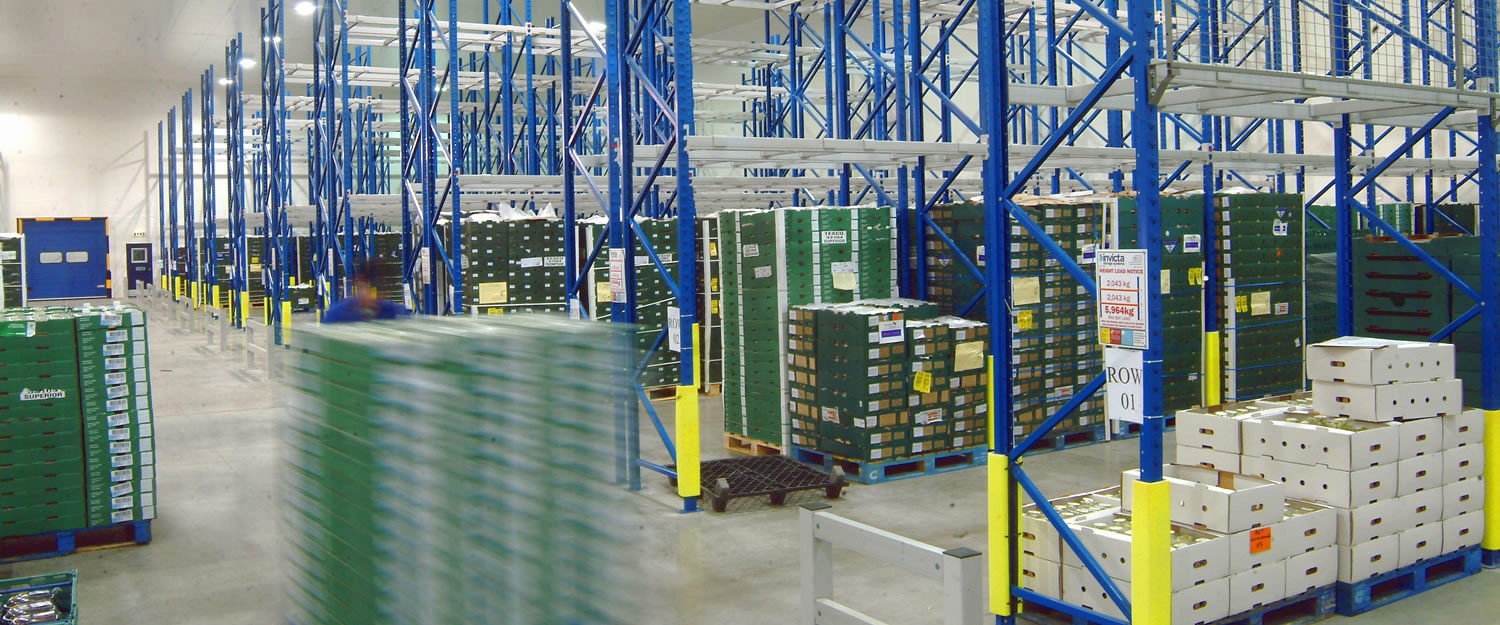
While software is at the core of order cubing, physical ‘hardware’ is equally important. By combining order cubing with the following high-density pallet racking systems, you can multiply the benefits, and benefit from entirely new ones:
Pushback racking
Pushback racking uses inclined lanes where pallets are pushed back as new ones are added. When a pallet is removed, the pallet behind it automatically moves forwards to the rack face. This is not only ideal for storing large volumes of similar products, but also allows for very high density storage, multiplying the existing benefits of order cubing.
Drive-in racking
Drive-in racking is a high-density storage solution that allows for deep storage of pallets, allowing warehouse vehicles to deliver pallets by driving into the racking bay. It’s well-suited for products with a high turnover rate. By combining drive-in racking with order cubing, businesses can maximise storage capacity and streamline picking operations.
Live racking
Sometimes known as flow racking, live racking is a gravity-flow system that automatically moves pallets from the raised back of a rack to the front for picking, making it ideal for FIFO (first-in, first-out) inventory management. By organising products based on their size and expiration dates, products can be rotated easily, and stock can be used up before it is spoiled.
Narrow aisle racking
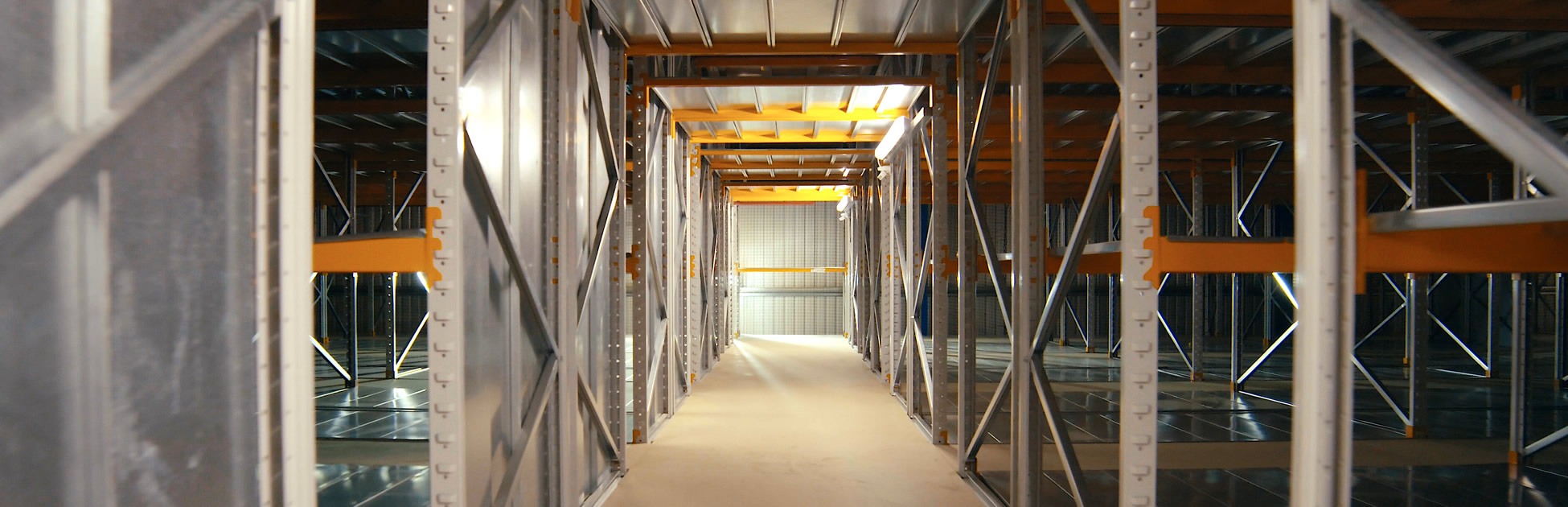
Narrow aisle or very narrow aisle (VNA) racking relies on specialised warehouse vehicles to allow for much narrower aisles than usual, providing maximum storage density in limited spaces. It’s often used in conjunction with automated guided vehicles (AGVs) for efficient picking and storage, and can be combined with order cubing to get the very most out of a space, and potentially reduce labour costs.
Modular shelving
Many of the pallet racking options we provide are also modular, allowing for systems to be expanded or altered, and different systems to be combined. The use of different storage types alongside order cubing can give more options to the software, with variable storage zones for different sized items, and better accessibility for different kinds of items.
How to implement order cubing
Assuming you meet the technical criteria, implementing order cubing starts with conducting a thorough product analysis. A modern WMS will allow you to carefully examine your entire product range, and categorise items based on their size, weight, and the frequency of retrieval. Factors such as the product dimensions, weight, fragility, and turnover rate will help you to design efficient storage zones that are logically organised and easily accessible to pickers, with consideration for their proximity to picking areas, product compatibility, and frequency of retrieval.
Next, you should choose racking systems that best align with your storage needs and the characteristics of your products. If you already have racking in place, this could be modified, extended or expanded to get the most out of order cubing. Storage capacity is relevant, but so are accessibility and cost-effectiveness, with different racking systems being more suitable for specific product types or storage needs.
The WMS (with some manual oversight) should then allow you to develop more efficient picking routes that minimise travel distance around the warehouse, make items easier to pick, and balance employee workloads. This can be further improved through the use of other technologies such as RFID or barcode scanners to help transmit data to and from the WMS, and quickly identify the location of items.
As with any new technology being introduced, you should also provide comprehensive training to warehouse staff. Ensure that all of your operatives are well-trained in what order cubing is and how your system works. This includes understanding the importance of adhering to designated storage locations, following efficient picking routes, and making use of the technology effectively. All of this will help to maximise the benefits of order cubing and minimise errors, giving you a clearer picture of how well it is working.
Once all of this is in place, you should make sure that both your strategies and the WMS are continuously monitored, making adjustments as needed to ensure that everything runs smoothly. Performance metrics such as picking time, error rates, and storage utilisation will help you identify areas for improvement, particularly to storage zones and picking routes, as well as your evolving need for different types of racking.
–
The level of integration required to successfully execute order cubing means that many businesses have chosen not to adopt it. If you are able to commit the time and resources required, however, the long-term benefits can be substantial.
By combining order cubing with well-chosen high density pallet racking systems, businesses can significantly improve their total storage capacity and picking speeds. All of this means more orders out of the door, fewer errors and happier customers—not bad for software and some shelves.
Accreditations & Affiliations






Share/Like this page